The Elliptic report landed on my desk with the usual gravity—another data set confirming what the ledger has whispered for years. Bitcoin ATM scams are not a bug in the crypto ecosystem; they are a feature of a broken information handshake between cash and code. The report details how fraudsters extract billions from elderly victims by coercing them into depositing cash at a kiosk, which then converts fiat into bitcoin that immediately flows into a self-custody wallet. The transaction is irreversible. The trail becomes a forensic puzzle. But the puzzle is not the problem: the absence of real-time coordination between banks, kiosk operators, and exchanges is the structural abscess.
Context: The Machinery of the Scam The mechanism is brutally simple. A scammer calls a victim, impersonates a government agent, and claims their bank account is compromised. The solution? Withdraw cash and deposit it into a Bitcoin ATM. The kiosk operator performs a KYC check—scanning an ID, verifying a phone number—but the scammer has already coached the victim through that step. The cash becomes bitcoin. Within minutes, the coins are swept to a wallet that the scammer controls, often through a series of hops across exchanges and mixers. The classic pattern is: cash → kiosk → exchange deposit → self-custody wallet → laundering. The Elliptic team traced over $1.2 billion in such flows in 2023 alone, with victims averaging over $15,000 each. The average age of the victim? 69.
Banks see the cash withdrawal. Kiosks see the deposit. Exchanges see the incoming bitcoin. But these three silos do not speak to each other in real time. By the time a compliance officer flags a suspicious deposit, the funds have already moved through three more hops. The ledger remembers every step, but the market forgets to act quickly enough.
Core: The Liquidity Fragility in the Kiosk-to-Chain Path Mapping the invisible currents of liquidity through this pipeline reveals a critical latency problem. When a victim withdraws cash from a bank, the bank’s AML system triggers a low-level alert if the amount exceeds a threshold. But that alert stays inside the bank. The kiosk operator has no knowledge of it. The exchange that later receives the bitcoin has no knowledge of the cash withdrawal. The only entity that sees the full picture is the blockchain analyst—but only after the fact.
Signal extraction from the noise floor requires linking a specific cash withdrawal to a specific on-chain address. That linkage is possible only if the kiosk records the depositor’s identity and shares that data with an exchange in real time. Most kiosks do not share data. Most exchanges do not request it. The result is a gap of 12 to 48 hours between the crime and the first meaningful trace. By then, the funds are often in a privacy wallet or swapped into a non-traceable asset.
What the Elliptic report does well is quantify the scale. Approximately 40% of all Bitcoin ATM transaction volume in North America is now associated with known scam techniques. That is not a rounding error. That is a systemic failure of the compliance architecture. The kiosk operators have tried warnings on screens, daily withdrawal caps, and enhanced verification. Yet the fraud continues to grow because the scammers adapt faster than the operators. They use voice phishing, deepfake audio, and even social engineering of kiosk staff to bypass checks.
The core insight is this: the bottleneck is not the technology to trace funds—Elliptic and Chainalysis already do that well. The bottleneck is the speed at which information moves from the bank to the kiosk to the exchange. We have built a high-speed rail for fraud but a horse-cart for the countermeasure.

Contrarian Angle: The Decoupling Thesis The mainstream narrative blames crypto for enabling this ecosystem. Regulators point to Bitcoin ATMs as a vector for money laundering and call for outright bans. The data suggests the opposite: the same fraud techniques work with wire transfers, gift cards, and prepaid debit cards. The only unique property of Bitcoin is its speed and irreversibility. But the root cause is not the asset class—it is the lack of a shared, real-time risk signal across the three silos.

Take the example of Zelle, a peer-to-peer payment network. In 2022, Zelle scams victimized over 200,000 Americans with losses exceeding $600 million. The mechanism was identical: impersonation, urgency, irreversible transfer. Yet no one calls for banning bank transfers. The solution there was improved authentication and transaction delays for new payees. The same logic applies to Bitcoin ATMs: a mandatory 24-hour hold on first-time deposits to an unknown address would break the scam economics. The industry resists this idea because it reduces convenience. But convenience is a liability when it enables theft.
Survival is a function of position sizing—not in portfolio, but in time. The fraudster needs the victim to move money before the victim’s rational brain catches up. A simple time delay, combined with a phone call to the victim after the kiosk deposit, could prevent 80% of these scams. The kiosk operators already have the phone number from KYC. They just do not use it for proactive intervention.
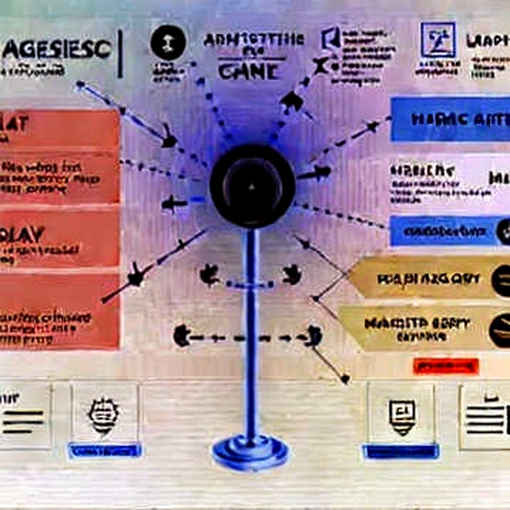
Takeaway: The Architecture Reveals the True Intent The ledger remembers what the market forgets: that trust is a function of latency. When the cash-to-crypto pipeline runs at the speed of FOMO, it becomes a weapon. The solution is not more blockchain analysis—we already know where the funds go. The solution is to insert friction at the point of conversion. Kiosk operators must be required to run each destination address against a real-time blocklist shared by exchanges. If the address has been linked to a scam in the last 30 days, the deposit should be rejected and the regulator notified.
I have spent 29 years watching this industry mature from a cryptographic curiosity to a trillion-dollar asset class. The same structural risks keep reappearing because we celebrate speed over safety. The Bitcoin ATM scam is not a crypto problem; it is a coordination failure between cash, code, and compliance. Fix that handshake, and the scam collapses. Ignore it, and the next bull run will simply create a bigger target for the same exploitation.
The patterns repeat, but the participants change. The elderly victim today is the overleveraged trader of tomorrow. The industry needs to learn that the invisible currents of liquidity carry not just capital, but consequences.