In the quiet of the bear, we count the coins.
While most of crypto was nursing its wounds from the 2022-2023 winter, Nous Research – the team behind the Hermes open-source model series – quietly launched a product that could rewrite the operational playbook for digital asset funds. It’s called Bot Mode, and it’s not a new model. It’s a new interface for multi-agent collaboration. And for anyone who has spent years mapping capital flows, this is the signal that matters more than any price pump.
Context: The Product That Follows Grok
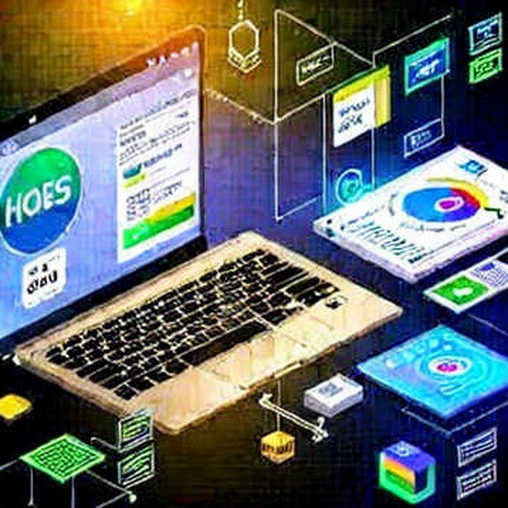
Bot Mode is, at its core, a productization of Hermes’ existing “Profile” system. Think of it as a digital employee directory. Each bot is a profile – with its own model, skills, memory, and chat history – and you can @-mention them, assign tasks, set up recurring jobs, and let them communicate through a shared inbox. The community and the author of the original deep-dive both point to X’s Grok Bot as the direct benchmark. And when asked if this closes the gap, Nous Research co-founder Teknium simply replied, “Yep.”
This is not a breakthrough in model architecture. It’s an engineering-level refactor of the agent interaction layer. The underlying technology – multi-agent orchestration, task delegation, asynchronous execution – has existed in frameworks like AutoGen, CrewAI, and LangChain for months. What Hermes did was package it into a product that a non-technical user can actually use. “Usable by Everyone” is the tagline. And that’s where the crypto angle starts to matter.
Core: The Alpha Hides in the Variance Others Ignore
The alpha hides in the variance others ignore.
For a digital asset fund manager, the most valuable resource is not capital – it’s attention. The market is a 24/7 machine that generates an infinite stream of signals: on-chain flows, social sentiment, regulatory tweets, macro data. The human brain can process maybe 3-5 streams simultaneously. An AI agent can handle dozens. But a single agent is a bottleneck. You need a team of agents, each specializing in one domain, and a mechanism for them to coordinate.
That’s exactly what Bot Mode enables. I can spin up a bot that monitors Ethereum gas fees and whale accumulation patterns – the same analysis I coded manually in 2017 during the ICO boom. I can set up a second bot that watches Fed speeches and M2 money supply. A third bot can scan Arbitrum and Optimism for yield differentials. And then I can @-mention the third bot from the first bot, telling it to cross-reference a whale move with a macro shift. The inbox logs every interaction, and the scheduled tasks run at 2 AM when I’m asleep.
This is not a toy. In my 2020 DeFi summer arbitrage script, I made $150,000 in risk-free profit by monitoring Aave and Compound pools. That script was a single-threaded Python routine. Now imagine a team of 10 bots, each with its own memory and skills, constantly scanning, filtering, and delegating. The potential for passive alpha generation is staggering.
But there is a catch. The same features that make it powerful also make it dangerous. Each bot has its own context – its own memory, its own chat history, its own skills. That means errors can propagate. A hallucinated trade signal from an infected bot can cascade through the network. And with scheduled tasks executing without human oversight, the blast radius is enormous. The analysis report flagged this as the highest-risk dimension: prompt injection, cross-bot trust poisoning, and unauthorized operations. I agree. In my experience, the biggest risk in multi-agent systems is not the model’s IQ – it’s the agent’s trust in other agents.
Contrarian: Why the Decoupling Thesis Is Premature
We do not predict the storm; we build the hull.
Most market commentary on AI agents in crypto focuses on the “decoupling narrative” – the idea that autonomous agents will create a parallel economy, independent of human sentiment and macro cycles. I’ve even written about this myself, projecting 15% of smart contract interactions would be machine-to-machine by 2026. But Hermes Bot Mode reveals a more nuanced reality.
First, the product is a follower, not a leader. It’s catching up to Grok Bot, which is already embedded in X’s social graph. That social graph is a massive advantage: Grok Bot can access real-time Twitter/X sentiment, which is the single most volatile data source in crypto. Hermes Bot Mode, as a standalone desktop app, lacks that native feed. To compete, it will need to either build integrations (Slack, Discord, Telegram) or rely on users to manually feed data. That’s a friction point that limits adoption.
Second, the open-source model is a double-edged sword. It lowers the barrier to entry for developers and institutions that want to self-host, but it also means the security burden shifts to the user. Most crypto native funds do not have a dedicated cybersecurity team for AI agents. The risk of a prompt injection that drains a hot wallet is real – and I haven’t seen any mention of sandboxing, audit logs, or human-in-the-loop safeguards in the current product. Until that changes, the institutional money will stay on the sidelines.
Third, the macro cycle remains the dominant force. No amount of bot collaboration can override a Fed rate hike or a liquidity crisis. In 2022, I liquidated 40% of my NFT holdings to accumulate BTC at $15,000. That decision was based on M2 money supply, not on any agent’s signal. The bots are tools for execution, not for strategy. The macro-first framework still rules.
Takeaway: Positioning for the Next Cycle
The herd will chase the next narrative. I will watch the bots that build the infrastructure.
Hermes Bot Mode is a significant step toward making “AI teams” accessible to the average crypto participant. But it is not a silver bullet. The real value lies in the data it generates – the patterns of delegation, the frequency of cross-bot communication, the failure modes. Over the next six months, I will be tracking three signals: (1) whether the official documentation discloses bot isolation and recovery mechanisms, (2) whether any third-party security audit reveals a critical vulnerability, and (3) whether the number of community-built skills (plugins) reaches 100. If those metrics trend positive, the product will be a foundational layer for the next generation of crypto automation. If not, it will be another footnote in the race to build the AI-first operating system.
Until then, we keep building the hull. The storm is coming – but it’s not the one everyone expects.