Zcash just performed a surgical strike on its own codebase. Ironwood is live at block 3,428,143 — a forced migration triggered by a supply integrity bug that could have shattered ZEC's 21 million hard cap. The old Orchard pool is deprecated. The new pool comes with formal verification. But this isn't a feature drop. It's a triage operation disguised as an upgrade.
Let me be blunt: I've spent years reverse-engineering zero-knowledge circuits, and this one smells like a near-miss. Speed was the only asset that didn't survive the audit.
Context: Why Now?
Zcash has always walked a tightrope between privacy and regulatory scrutiny. Orchard, its third-generation privacy protocol, was supposed to be the final word — a streamlined zk-SNARKs implementation using Halo 2. But in May 2024, Zcash Open Development Lab (ZODL) discovered a vulnerability in Orchard's supply integrity logic. Not a leak, not a double-spend bug — something worse. A flaw that could allow an attacker to mint ZEC out of thin air.
No funds were lost. The team patched it quietly. But patches aren't enough for a protocol that prides itself on mathematical guarantees. So they decided to scrap the entire pool and rebuild.
Ironwood is the result: a new Orchard pool hardened with formal verification — a mathematical proof that the code behaves exactly as intended. The old pool is gated, meaning users must migrate their shielded PRIV funds to continue using privacy features. If they don't, their ZEC remains locked in a deprecated pool, effectively frozen.
As someone who audited early smart contract logic in the DeFi Summer, I can tell you: forcing a user migration is the nuclear option. It shows how serious the bug was — and how little confidence the team had in a simple fix.
Core: The Technical Anatomy of Ironwood
Ironwood is not a consensus change. Zcash's PoW remains untouched. The upgrade only affects the shielded pool layer — specifically, the Orchard note management logic.
Here's what changed:
- New pool, new proving system. The Ironwood pool uses an improved version of the Halo 2 proving system, but the real upgrade is the addition of formal verification. ZODL commissioned an independent third-party audit (details of the auditor remain undisclosed as of writing) to mathematically verify the circuit's soundness. This is a rare step in crypto — most projects rely on manual code review or fuzzing. Formal verification is expensive and time-consuming, but it's the only way to guarantee that no forged notes can be created.
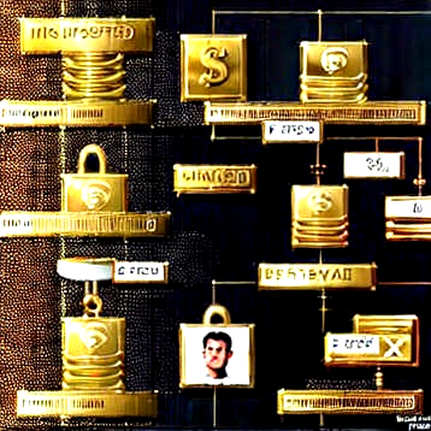
- Gate mechanism for migration. Users with funds in the old Orchard pool must initiate a migration transaction through a new gate smart contract. This gate checks that the old note is spent and creates a new note in the Ironwood pool. The process is one-way: once migrated, funds cannot return to the old pool. The gate is designed to prevent double-spending during the transition.
- Deprecation of the old pool. The old Orchard pool is effectively frozen. No new transactions can be created using its notes. Over time, its balance will dwindle as users migrate. But here's the rub: if users don't migrate, their funds become immobile. They remain on the ledger but cannot be spent in privacy-preserving transactions.
From a tokenomics perspective, ZEC's total supply is unchanged. The hard cap is preserved. But the effective circulating supply may drop if a large chunk of funds gets stuck in the deprecated pool. Arbitrage isn't just about price — it's about understanding where liquidity is trapped.
The migration imperative. At the time of activation, the old Orchard pool held an estimated 1.2 million ZEC (roughly $30 million at current prices). If even 20% of that fails to migrate within the first month, we could see a significant liquidity vacuum. Volume tells the truth when price tries to lie — and right now, volume in ZEC is thin.
Why formal verification matters — but isn't a silver bullet. Formal verification proves that the code matches its specification. It does not prove that the specification is correct, nor does it account for economic attacks, social engineering, or implementation bugs in the Rust compiler. For Zcash, it's a necessary step to rebuild trust after the May incident. But it's not a competitive advantage against Monero, which has no formal verification but a track record of 10 years without a supply bug.
As I've written before, survival is a strategy, but leverage is a mindset. Zcash is betting that formal verification will give it leverage with exchanges and regulators. Whether that bet pays off depends on execution.
Contrarian: Ironwood Exposes Zcash's Deeper Problem
The mainstream narrative is that Ironwood is a proactive security upgrade. I see it differently: it's an admission of technical fragility. The fact that an entire protocol generation — Orchard — needed to be abandoned rather than patched suggests that the original design had structural flaws.
We didn't break it, but we're about to fix it in the most disruptive way possible.
User friction kills adoption. Privacy coins already struggle with onboarding. Requiring users to perform a manual migration — especially for a protocol that promises "seamless privacy" — is a UX nightmare. Most ZEC holders use exchanges or simple wallets; they may not even know they have shielded funds. If exchanges don't handle the migration automatically, we could see a spike in support tickets and, eventually, a permanent loss of funds for neglectful users.
This upgrade doesn't address Zcash's existential threats. Privacy coins are under siege. Monero is delisted from major exchanges, Tornado Cash is sanctioned, and regulators are cracking down on any protocol that enables anonymous transactions. Ironwood doesn't change Zcash's regulatory status. It doesn't make it easier to use. It doesn't attract new developers. It's a defensive move in a war that Zcash is losing.
The real contrarian take: Ironwood may accelerate Zcash's decline. By locking liquidity in a deprecated pool and forcing migration, Zcash is creating a natural experiment in user apathy. If a significant portion of shielded ZEC becomes permanently stuck, the network's utility drops. Fewer users, less liquidity, less demand. And in a bear market, that's a death spiral.

Is the market mispricing this? Possibly. Short-term, ZEC could see a pump on the "bug fixed" narrative. But the structural risk of mass immobilization is being ignored. I've seen this pattern before: projects overhype a technical fix while ignoring the human and economic costs. Efficiency is the price we pay for speed, but ironwood might be too efficient at driving users away.
Takeaway: What to Watch Next
For traders: Watch the old Orchard pool balance on Zcash block explorers. A slow migration rate below 50% in the first two weeks is a bearish signal. For holders: If you own ZEC in a shielded address, migrate immediately. Don't rely on exchange updates.
For the broader market: This upgrade is a case study in how to handle critical vulnerabilities — transparently, with formal verification, but also at the cost of user friction. Other privacy protocols (like Aleo or Aztec) should take notes.
The real test isn't the code. It's whether users will move.