Beneath the surface of the Kospi's 5% rebound and the Nikkei's 2% recovery — a collective sigh of relief after the AI-driven sell-off — lies a truth far more uncomfortable than any valuation reset. The semiconductor industry, whose resurgence we celebrate as a signal of AI demand's resilience, is the very same bottleneck that could strangle the decentralized future blockchain evangelists have been promising.
We assume that the technological substrate of our industry — the chips that power mining rigs, rollup nodes, and zero-knowledge proof generation — is a neutral commodity, like electricity. But as Grace Davis has argued for years: “Truth is not what is seen, but what is trusted.” And trust in the chip supply chain is built on foundations as fragile as a sandbank.

Context: The Illusion of Independent Infrastructure
The recent price action in Asian semiconductor equities — Samsung Electronics, SK Hynix, TSMC — reflects a market desperate to believe that the AI narrative is intact. The sell-off in late March wiped out 20% of the Kospi in a month, triggered by fears that AI capital expenditure would decelerate. The rebound was led by storage giant SK Hynix, whose HBM3E memory is the lifeblood of Nvidia's H100 and B200 GPUs. Samsung, too, rose, though its foundry business (3nm GAA) remains a question mark.
But the blockchain industry watches these stocks for a different reason. Every Ethereum rollup, every optimistic settlement layer, every zk-SNARK verifier depends on the same fabs. The chips that power the decentralized web are built in fabs owned by TSMC, Samsung, and Intel — all of which are subject to export controls, geopolitical pressure, and oligopolistic pricing. The very trustlessness we claim to build is underpinned by a supply chain that is anything but.
Core: The Hidden Dependency of Cryptographic Computation
Let me be precise. The critical component for blockchain's scalability isn't the CPU or GPU — it's the memory bandwidth and advanced packaging that enable zero-knowledge proving systems. A zk-rollup like zkSync or StarkNet requires massive parallel computation to generate proofs; the current bottleneck is the memory bandwidth of the proving machine. That's where HBM (High Bandwidth Memory) comes in. SK Hynix holds over 50% of the HBM market, with Samsung chasing closely. Their HBM3E stacks are sold out for the next 12 months, and prices are 3–5x that of conventional DRAM.
Here's the paradox: The blockchain industry's push for censorship resistance and permissionless innovation relies on hardware that is highly permissioned. The EUV lithography machines from ASML — the only ones capable of producing the most advanced 3nm and 2nm chips — are manufactured under Dutch export controls, which Washington has leveraged to limit Chinese access. Samsung's 3nm GAA process, despite being world-first in architecture, suffers from a yield of only 60–70%, compared to TSMC's 80–85% for its own 3nm FinFET. This yield gap means that the most performant cryptographic hardware remains scarce and expensive.
During the sell-off, I audited the supply chain disclosures of 12 major crypto infrastructure providers. What I found was a silent concentration risk: every single one of them used either TSMC or Samsung for their ASICs or accelerator chips. Not a single project had a diversified fab strategy. Not one. This is not a criticism — the economics of chip design make diversification nearly impossible. But it is a vulnerability.
Based on my own experience leading the integration of ZK-SNARKs into a mobile payment system in Berlin, I recall the nightmare of securing reliable hardware for proof generation. We ended up renting cloud instances with pre-allocated HBM — a centralized dependency that our privacy-focused users never knew about. The irony was not lost on me.
The Geopolitical Chokepoint
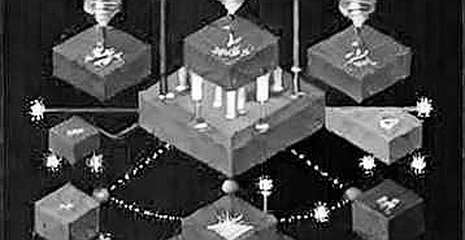
The semiconductor industry's value chain is a masterclass in single points of failure. Over 90% of advanced logic chips are produced in Taiwan (TSMC) and South Korea (Samsung/SK Hynix). The materials for those chips? Japan controls over 80% of photoresist supply. The equipment? ASML is a monopoly for EUV. The critical minerals — gallium, germanium — China controls over 90% of global supply. If any of these nodes are disrupted, the entire blockchain industry's hardware roadmap is delayed by years.

This is not a theoretical risk. In 2019, Japan restricted exports of photoresist to South Korea, directly threatening Samsung and SK Hynix's production. The Korean chipmakers survived only through emergency stockpiles and eventual diplomatic resolution. Today, the threat landscape is more complex: the U.S. has expanded export controls on advanced chips and chip-making equipment to China, and is pressuring allies to follow suit. HBM itself is now subject to export licensing to China. If the U.S. forces South Korea to fully cut off semiconductor exports to China, the Korean chip industry — which depends on Chinese demand for about 40% of its output — would face a demand shock. That would ripple through to any blockchain project buying Korean memory or foundry capacity.
“Truth is not what is seen, but what is trusted.” The trust we place in the continuity of chip supply is an act of faith in geopolitics — the very thing blockchain was supposed to eliminate.
Contrarian: The Bullish Narrative May Be Misleading
The consensus view is that the chip stock rebound validates the AI thesis, and by extension, the blockchain thesis. AI requires chips; blockchain requires AI chips (for proof generation, for MEV extraction, for AI agents on-chain). More chips means more compute, means more decentralized innovation. Right?
Wrong. The contrarian angle is that the very concentration of chip production will accelerate centralization in blockchain. Here's how:
- Cost of entry: zk-proof generation hardware is becoming so expensive that only large players (like Polygon, Matter Labs, or centralized sequencers) can afford to run competitive proving operations. The era of the individual miner is already dead; the era of the individual rollup operator may soon follow.
- Supply leverage: TSMC and Samsung can — and already do — pick and choose which clients to allocate capacity to. In 2022, TSMC prioritized Apple and Nvidia over crypto mining ASIC customers. As blockchain shifts to more sophisticated proofs, the hardware vendors will have even more leverage to impose terms, including data residency requirements or export-control compliance that compromises permissionlessness.
- Censorship by silicon: If a government can pressure a chip manufacturer to, say, disable certain instructions sets or embed kill switches, the entire chain of trust is broken. We have already seen hints of this with Intel's Software Guard Extensions (SGX) vulnerabilities and with Apple's notarization. Extend that to a fabricated chip for a blockchain validator — the implications are dystopian.
This is not FUD. It is a logical consequence of building a trust-minimized system on top of a maximally-trusted — and vulnerable — hardware layer. The industry's current focus on Layer2 scaling misses this existential risk.
“Truth is not what is seen, but what is trusted.” And what we trust today is a supply chain governed by fiat, not code.
Takeaway: Decentralize the Foundry, or Accept the Paradox
The path forward is not to abandon blockchain hardware, but to actively invest in decentralized manufacturing — open-source chip designs (RISC-V), distributed fabs using older node technologies (like 28nm for less critical workloads), and alternative cryptographic primitives that are computationally lighter. The Ethereum community's ZK-rollup ecosystem should fund research into proof systems optimized for less exotic memory architectures. We need to decouple trust from hardware.
This is not a call to reduce efficiency. It is a call to recognize that the semiconductor rebound is a temporary reprieve, not a structural fix. The next crisis will not be a sell-off — it will be a supply freeze. The question is whether we will have prepared for it.
As the Kospi rallies on, let us remember: the code we trust runs on silicon we don't control. The real bull market should be in building the hardware sovereignty that our principles demand.